

Tag: HEALTH
Interactions between TCF7L2 and MC4R gene variants with dietary factors on Type 2 Diabetes-related factors in the British population
 Cindy Bei completed the Summer Studentship at the University of Reading under the supervision of Dr Vimal Karani.
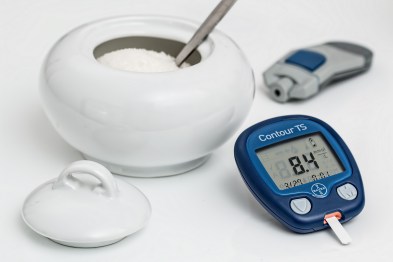
Project Title: Interactions between TCF7L2 and MC4R gene variants with dietary factors on Type 2 Diabetes-related factors in the British population.
About the project:
Statistical analysis on a study cohort to investigate the interaction between TCF7L2 gene variants [aka: single nucleotide polymorphisms] (rs12255372 and rs7903146) and MC4R gene variant (rs17782313) and dietary factors on Type 2 Diabetes related factors, in the British population.
What was the best aspect of your Summer studentship experience?
Being able to create my own work plan towards the project and getting the chance to experience what research is like.
What was the most challenging part of your studentship?
Overall my project wasn’t particularly challenging, but having to learn all of the basic and advanced knowledge so quickly in a short amount of time was hard.
What’s the one thing you learnt that is transferable to future work you might do?
Creating and delivering a presentation to professionals and non-professionals was an experience, especially translating complex science into simple lay-man’s terms.
Tips for anyone who is interested in applying for the NS – SS or a similar fellowship:
Use this opportunity to learn and experience as much as you can. 8 weeks (or however long other fellowships may be) isn’t that long, but it is long enough to learn some excellent skills that would be useful in future work: in industry, academia or charities. What you learn depends on what you want to learn.
Would you be interested to do more research in the future and if so what topic(s) would interest you?
I’m definitely going into research. As for the topic, I’m especially interested in the gut microbiota-brain axis, especially seeing the influence of diet on the gut microflora and subsequently, mental illnesses like depression or anxiety.
Glycaemic response and satiety after consumption of gluten-free bread containing buckwheat
Hanna Walsh completed the Summer Studentship at Oxford Brookes University under the supervision of Dr P. Sangeetha Thondre. You can find Hannah on Twitter.

Project Title: Glycaemic response and satiety after consumption of gluten-free bread containing buckwheat.
About the project:
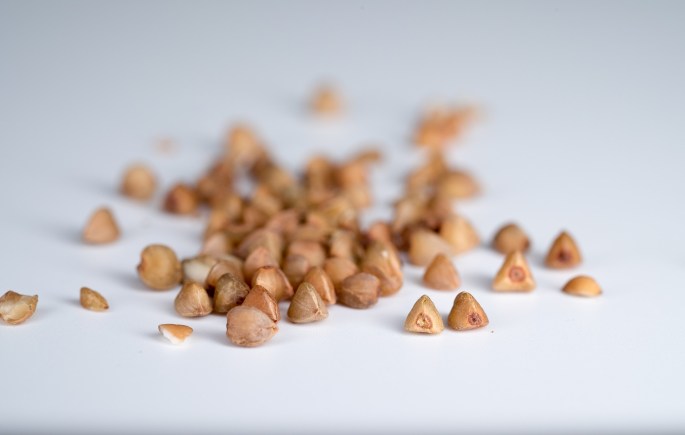
My project was about looking at the effects of a gluten-free product with buckwheat on glycaemic response and satiety. Buckwheat is naturally gluten-free and has high levels of fibre, protein and minerals which we are hoping could be used to create healthier product options for coeliacs following gluten-free diets.
What was the best aspect of your Summer studentship experience?
The best part of my summer studentship was being able to apply all the knowledge I had about not only nutrition, but research methods and statistical analysis. I liked being given responsibility and being able to work on my own project.
What was the most challenging part of your studentship?
Though I liked the independence, it was at times challenging especially in the beginning when everything is new. I study in Finland so coming to England and getting used to the working environment was a big step.
What’s the one thing you learnt that is transferable to future work you might do?
I learnt all about the practicalities of undertaking research: lab skills, recruiting people, recording data. In general, it also made me more confident in my own skills and abilities.
Tips for anyone who is interested in applying for the NS – SS or a similar fellowship:
Try and find a good supervisor who will be there to support you but also give you responsibility because that is how you learn the most. They will also help you shape a strong research project.
Would you be interested to do more research in the future and if so what topic(s) would interest you?
I think I would enjoy doing more research in the future. Currently, I am interested in tackling nutritional problems in developing countries so being able to build a better understanding of that via research would be interesting.
Estimating the dietary intake of “free sugars” in the teenage population in the United Kingdom
Dove Yu is a final year Food and Human Nutrition student at Newcastle University. Dove completed the Summer Studentship at the MRC-EWL under the supervision of Birdem Amoutzopoulos and also received support from her advisor Professor Chris Seal at Newcastle University. You can find Dove on Twitter or contact her via her email: doveyu30@hotmail.com.

Project title: ‘Estimating the dietary intake of “free sugars” in the teenage population in the United Kingdom’.
About the project:
The recent SACN report recommends in line with WHO that free sugars intake should not exceed 5% of daily energy intake. However, UK NDNS reports sugar intake as “total sugar” and “non-milk extrinsic sugar”. Therefore, this study aimed to explore the feasibility of estimating free sugar intake using NDNS year 4 data and identifying suitable sugar definitions which can be used in population-based nutrition studies.

What was the best aspect of your Summer studentship experience?
This studentship allowed me to have a practical experience of doing my own research from thinking the rationale of the study to reporting the study findings. This is so different from doing coursework, where you may receive instructions or guidelines as you need to be creative and show your initiative while doing research. Through literature search, I understood more about the different definitions of dietary sugars and the scientific evidence pertaining to the benefits of reducing free sugar intake. Through designing my own study protocol, I developed my critical thinking and decision making skills. All of the skills that I gained here are very useful for doing my dissertation.
What was the most challenging part of your experience?
Manipulating a large database can always be challenging. I used to maintain a list of tasks that can be accomplished in a short time block. However, some tasks took me a lot more time than I thought to complete. So the challenge really is how you plan, prioritise and use your time effectively. Originally, we aimed to look at all of the foods consumed by the teenage population in NDNS year 1-4 but then we finally considered using NDNS year 4 only due to the limited time available. In doing research, you need to be adaptive as well because there are always changes happening.
Tips for anyone who is interested in applying for the NS – SS or a similar fellowship:
If you want to engage with any projects related to food composition, you’ve got to be well organised and pay attention-to-details. A good plan is important for any type of research project. Do prioritise things that are important. If you really get stuck with your research, think of any alternative ways to complete your tasks and do seek advice from your supervisor. Best of luck for those of you who would like to participate in this good opportunity!!!!
The effect of delivering dietary nitrate via different food matrices on blood pressure in normotensive volunteers
Caroline Day completed the Summer Studentship at the Nutrition and Dietetics Department at King’s College London under the supervision of Dr Trevor George. Caroline, myself and Harriet Smith also run Fight the Fads, a nutrition media platform that addresses and corrects misinformation in the media with evidence-based science. You can find FTF on Twitter and Instagram.

Project Title: The effect of delivering dietary nitrate via different food matrices on blood pressure in normotensive volunteers
About the project:
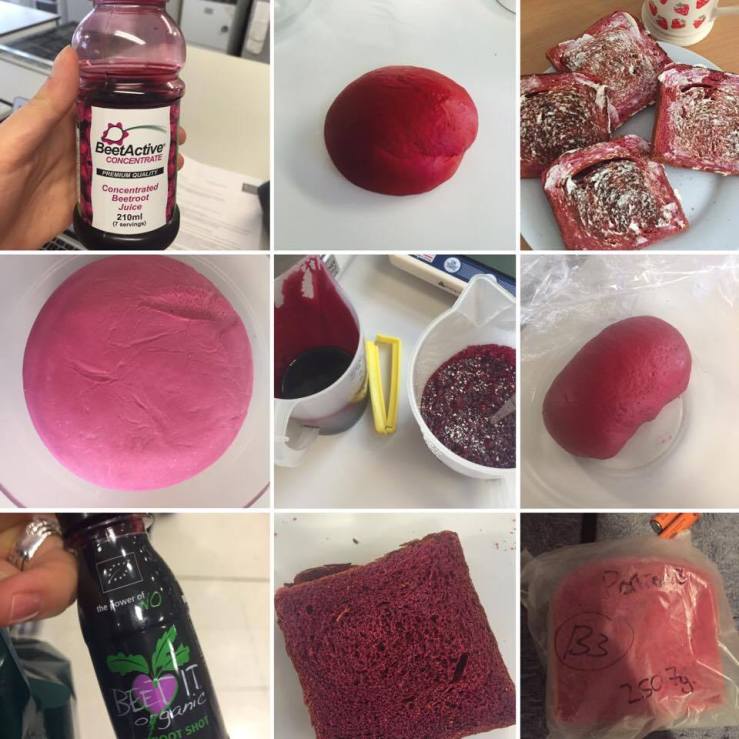
My project investigated the effect of the consumption of dietary nitrate, consumed in the form of both beetroot bread and beetroot juice, on blood pressure.
Increased vegetable consumption has been associated with a reduction in blood pressure and reduced risk of cardiovascular disease. Originally, this association was thought to be a result of the anti-oxidant properties of vegetables. More recently however the effect vegetable nitrate on blood pressure has been investigated. Vegetables including beetroot have a high nitrate content which after ingestion is reduced endogenously to nitric oxide, a potent vasodilator. Previous studies have found the consumption of beetroot juice is associated with a significant reduction in systolic blood pressure. This could have important clinical relevance if the dietary nitrate in beetroot could be transferred to a commonly consumed food such as bread, which could then be used in the lifestyle management of hypertensive patients.
Whist some studies have found that beetroot enriched bread products also reduced blood pressure in normotensive subjects, no studies had compared the effect of delivering nitrate via bread and juice using beetroot from the same source, so direct comparisons of the efficacy of each method of delivery have not been possible. My project aimed to create a novel beetroot bread product to establish if it was possible to create the same blood pressure lowering effect as when the same source of beetroot was consumed as a juice.
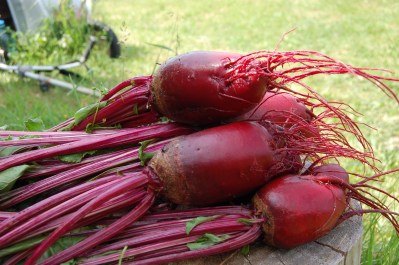 Additionally, I wanted to test if my increasing the nitrate content in the novel beetroot bread, it was possible to create further reductions in blood pressure.
My results demonstrated that the both beetroot juice and beetroot bread lowered blood pressure in participants. After the consumption of beetroot bread, blood pressure remained lower for two hours longer than beetroot juice consumption.
What was the best aspect of your Summer studentship experience?
Having the opportunity and funding to design and implement your own research idea is an invaluable experience. I am considering expanding the study for my dissertation project next year, I have gained skills so many areas that I can take forward with me to make this process much smoother! Particularly in participant recruitment, project planning and data analysis.
What was the most challenging part of your studentship?
Learning to adapt when the project didn’t go to plan. Adding beetroot extract to a standard bread recipe presented many challenges. I had originally intended to maximise the nitrate content of the bread by using a concentrated beetroot juice extract. Unfortunately, the high sugar content of this extract killed the yeast in the standard bread recipe and my loaf ended up more like a cake. This then delayed the project as I had to source and trial other forms of beetroot extract. After two disappointing weeks of trial and error, and thirty loaves of unusable bread I finally found a recipe that worked. This has taught me that patience and flexibility are crucial skills for working in research!
What’s the one thing you learnt that is transferable to future work you might do?
My study was powered for 24 volunteers and only 9 were recruited, so the results do not have sufficient statistical power to draw conclusions even though a pattern was observed. Experiencing the difficulties of participant recruitment has been very useful as this is something I will need to do on a larger scale for my dissertation.
Tips for anyone who is interested in applying for the NS – SS or a similar fellowship:
When researching your project for the application process, I would recommend exploring a number of different project ideas. Speaking to researchers in different areas and thoroughly explore the literature. By doing this I gained a lot of knowledge in different research areas before deciding on my final topic, which helped both with the planning of chosen project and has sparked ideas for future research.
Would you be interested to do more research in the future and if so what topic(s) would interest you?
I am hoping to continue this project as part of my final year dissertation with a larger sample size. There is also the potential to test the bread products on participants with hypertension as all the studies to date have used normotensive subjects.
 research girl today